A Tour of the World’s Most Iconic Observatories
Observatories have long served as pivotal sites for astronomical research, providing platforms to study celestial phenomena and expand our understanding of the universe. Across the globe, certain observatories have become iconic due to their historical significance, technological innovations, or ongoing contributions to science. This article offers a tour of some of the most renowned observatories, focusing on Mount Wilson, Palomar, and Mauna Kea, while also acknowledging the role of Greenwich Observatories in the broader context of astronomical heritage.
The selection of these sites reflects a combination of factors, including their locations, the instruments they house, and the scientific questions they have helped address. By examining these observatories, we can trace the evolution of astronomical techniques and the collaborative efforts that drive discovery. The following sections provide an overview of each observatory, highlighting key milestones and the context in which they operate.
It is important to note that astronomical research depends on a multitude of variables, including atmospheric conditions, technological capabilities, and international cooperation. The contributions of these observatories are therefore part of a larger, ongoing process of inquiry that involves many institutions and individuals worldwide.
Mount Wilson Observatory: A Century of Stellar Discovery
Located in the San Gabriel Mountains of California, Mount Wilson Observatory has played a central role in the development of modern astrophysics. Established in the early 20th century, it became home to some of the largest telescopes of its time, including the 60-inch and 100-inch Hooker telescopes. These instruments enabled astronomers to make groundbreaking observations that reshaped our understanding of the cosmos. For instance, Edwin Hubble’s work at Mount Wilson provided evidence for the existence of galaxies beyond the Milky Way and contributed to the understanding of the universe’s expansion.
The observatory’s location at an elevation of approximately 1,740 metres offers relatively clear skies and minimal light pollution, factors that were crucial for early telescopic observations. Over the decades, Mount Wilson has hosted a wide range of research programmes, from studies of stellar spectra to investigations of solar activity. Its historical significance is underscored by its designation as a National Historic Landmark, recognising its role in the advancement of science.
Today, Mount Wilson continues to support astronomical research and public outreach, although its instruments have been surpassed by more modern facilities. The site remains a testament to the ingenuity and perseverance of early 20th-century astronomers, and its legacy is preserved through ongoing educational initiatives and collaborative projects.
Palomar Observatory: Engineering Marvels and Scientific Contributions
Palomar Observatory, also in California, is renowned for its 200-inch Hale Telescope, which was the largest effective telescope in the world for several decades after its completion in 1948. The construction of the Hale Telescope was a monumental engineering feat, involving innovative techniques in mirror casting and precision machining. Its success demonstrated the feasibility of large-scale astronomical instruments and paved the way for future observatories.
Palomar’s scientific contributions are extensive. The Hale Telescope was used to study the nature of quasars, to map the large-scale structure of the universe, and to conduct surveys that led to the discovery of numerous asteroids and comets. Additionally, Palomar has been instrumental in the development of adaptive optics and other technologies that enhance observational capabilities. The observatory is part of the California Institute of Technology’s astronomy programme and continues to be a hub for research and innovation.
Visitors to Palomar can explore the observatory’s history through guided tours, which provide context about the challenges and triumphs of building and operating such a facility. The site also emphasises the importance of dark skies and the ongoing efforts to mitigate light pollution, which affects observatories worldwide.
Mauna Kea Observatories: A Premier Astronomical Site
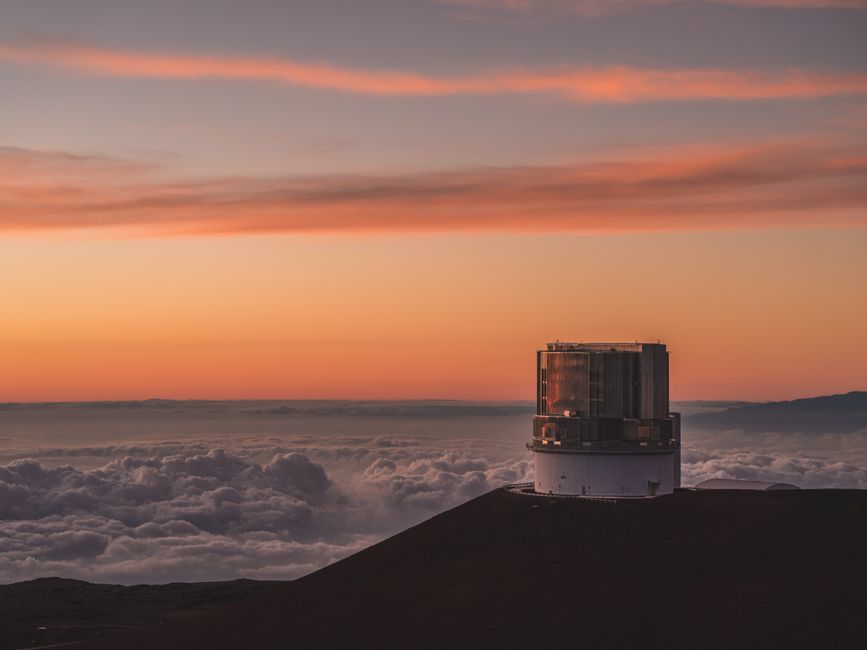
Mauna Kea, a dormant volcano on the island of Hawaii, hosts one of the world’s most significant concentrations of astronomical observatories. Its summit, at an elevation of about 4,200 metres, offers exceptional observing conditions, including low humidity, stable air, and minimal light pollution. These factors have attracted a diverse array of telescopes, including the Keck Observatory, the Subaru Telescope, and the Gemini North Telescope, among others.
The observatories on Mauna Kea have contributed to a wide range of astronomical discoveries, from studies of exoplanets to observations of distant supernovae. The site’s high altitude and dry atmosphere make it particularly suitable for infrared and submillimetre astronomy, enabling researchers to probe the cooler regions of the universe. The collaboration among various international partners has fostered a rich environment for scientific exchange and technological development.
However, the presence of observatories on Mauna Kea has also raised cultural and environmental considerations. The mountain is sacred to Native Hawaiians, and the balance between scientific research and cultural preservation is a subject of ongoing dialogue. This context highlights the importance of respectful and inclusive approaches to astronomical development.
Greenwich Observatories: A Historical Legacy
While not among the high-altitude sites discussed above, Greenwich Observatories in the United Kingdom holds a unique place in the history of astronomy. Founded in 1675, it was established to improve navigation and has since been associated with the Prime Meridian and Greenwich Mean Time. The observatory’s historical instruments, such as the Airy Transit Circle, are preserved as part of the Royal Observatory Greenwich, which is now a museum and educational facility.
Greenwich’s contributions extend beyond navigation to include early astronomical cataloguing and timekeeping. Its legacy continues through the work of the Royal Observatory and its role in public engagement with science. For those interested in the history of astronomy, Greenwich offers valuable insights into how observational practices have evolved over centuries.
While Greenwich Observatories no longer operates as a major research facility, its influence persists in the standardisation of time and the global coordination of astronomical observations. This historical perspective complements the achievements of more modern observatories and underscores the cumulative nature of scientific progress.
Reflections on Observational Astronomy
The tour of Mount Wilson, Palomar, Mauna Kea, and Greenwich illustrates the diversity of observatories and their roles in advancing astronomical knowledge. Each site reflects a unique combination of geographical advantages, technological innovation, and scientific inquiry. Their contributions are not isolated achievements but part of a collective endeavour that spans generations and continents.
In considering these observatories, it is evident that astronomical research depends on a complex interplay of factors, including funding, international collaboration, and public support. The future of observational astronomy will likely involve new facilities and technologies, but the lessons from these iconic sites remain relevant. They remind us that scientific progress is incremental and often relies on the dedication of many individuals working over long periods.
For those inspired by these observatories, numerous resources are available to learn more about their history and ongoing work. Whether through visits, online archives, or educational programmes, the legacy of these sites continues to inform and inspire. As we look to the future, the principles of transparency, collaboration, and respect for diverse perspectives will remain essential in the pursuit of astronomical discovery.