How Radio Observatories Unlock the Secrets of the Universe
Radio observatories are specialised facilities that detect radio waves emitted by celestial objects. Unlike optical telescopes, which rely on visible light, radio telescopes can observe the universe through a different part of the electromagnetic spectrum. This allows them to uncover phenomena that would otherwise remain invisible, such as the radio emissions from pulsars and distant galaxies. By capturing these signals, radio observatories provide a unique window into the physical processes occurring in space.
The development of radio astronomy has significantly expanded our understanding of the cosmos. Ground-based observatories, such as those operated by Greenwich Observatories, play a crucial role in this field by collecting and analysing radio signals. These signals are often very faint and require sophisticated technology to detect and interpret. Through careful observation and analysis, researchers can infer the presence of objects and phenomena that are not accessible through other means.
This article explores how radio observatories work, what they reveal about galaxies and pulsars, and the methods used to extract meaningful information from invisible signals. It also discusses the challenges involved and the importance of continued observation for advancing astronomical knowledge.
Fundamentals of Radio Astronomy
Radio astronomy is the branch of astronomy that studies celestial objects at radio frequencies. Radio waves are a form of electromagnetic radiation with longer wavelengths than visible light. They can pass through interstellar dust and gas, which often block optical observations. This makes radio astronomy particularly useful for studying regions of space that are obscured in other wavelengths.
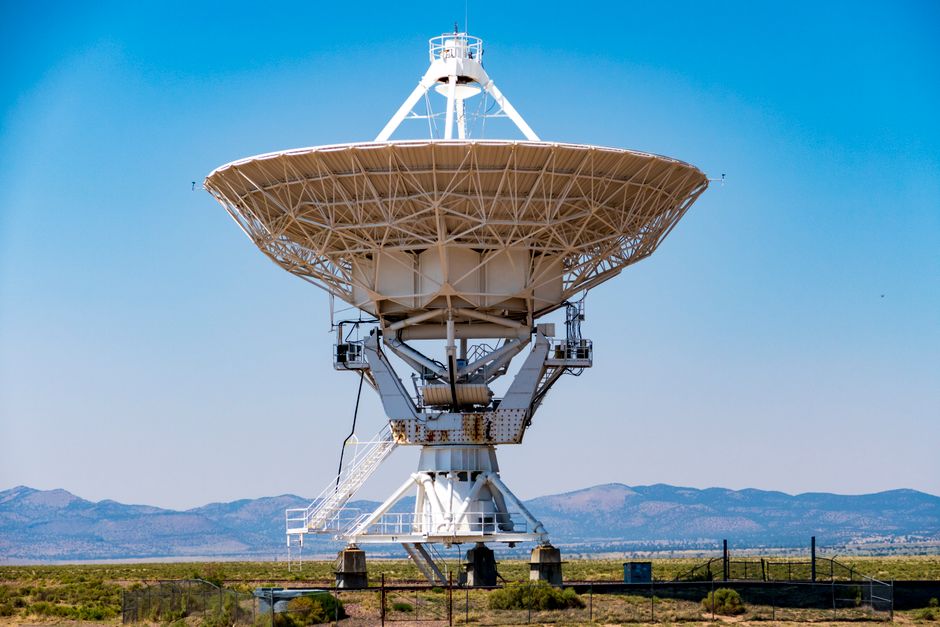
Radio telescopes are the primary instruments used in radio astronomy. They consist of large antennas or arrays of antennas that collect radio waves and focus them onto receivers. The signals are then amplified and processed to produce data that can be analysed. The size of the antenna determines the resolution and sensitivity: larger antennas can detect fainter signals and resolve finer details.
One of the key advantages of radio astronomy is its ability to operate day and night, and in various weather conditions. Unlike optical telescopes, radio telescopes are not affected by clouds or daylight. This allows for continuous observation and long-term monitoring of celestial objects. The data collected can be used to study a wide range of phenomena, from the rotation of galaxies to the emission from pulsars.
Detecting Invisible Signals from Space
Radio observatories detect invisible signals by capturing radio waves emitted by natural processes in space. These signals are incredibly weak, often requiring large collecting areas and sensitive receivers. The signals are typically digitised and processed using computers to extract information about their origin.
One common technique is interferometry, where multiple telescopes are combined to act as a single, larger telescope. This increases the resolution and allows astronomers to create detailed images of radio sources. Interferometry has been used to study the structure of galaxies and to pinpoint the locations of pulsars.
The signals received can be analysed in various ways. For example, the frequency, intensity, and polarisation of the radio waves can provide clues about the physical conditions in the emitting region. The timing of signals from pulsars can reveal their rotation rates and magnetic field strengths. By comparing observations from different telescopes, researchers can also determine the distance and motion of celestial objects.
Despite the challenges, the detection of these invisible signals has led to numerous discoveries. Radio observatories have identified new types of objects, such as radio galaxies and quasars, and have provided evidence for phenomena like gravitational waves. Each detection adds to our understanding of the universe and opens up new questions for further study.
Unveiling Galaxies Through Radio Waves
Galaxies emit radio waves through various mechanisms. For instance, supernova remnants and active galactic nuclei produce strong radio emission. By observing these radio waves, astronomers can study the structure and evolution of galaxies, including their magnetic fields and the distribution of cosmic rays.
Radio observations can also reveal the presence of neutral hydrogen gas, which is abundant in galaxies. This gas emits a characteristic radio signal at a wavelength of 21 centimetres. Mapping this emission allows astronomers to trace the spiral arms of galaxies and measure their rotation curves. Such measurements have provided evidence for dark matter, as the observed rotation cannot be explained by visible matter alone.
Greenwich Observatories, with its historical legacy in astronomy, contributes to this field by supporting research and public engagement. The data from radio telescopes are often combined with observations from other wavelengths to build a comprehensive picture of galaxies. This multi-wavelength approach is essential for understanding the complex processes that shape galaxies over cosmic time.
Furthermore, radio observations of distant galaxies can serve as probes of the early universe. The redshift of radio signals indicates how far away a galaxy is and how fast it is moving. This helps astronomers map the large-scale structure of the cosmos and study the formation of galaxy clusters.
Pulsars: Cosmic Lighthouses
Pulsars are highly magnetised, rotating neutron stars that emit beams of radio waves. As they spin, these beams sweep across space like a lighthouse, producing regular pulses that can be detected by radio telescopes. The discovery of pulsars in 1967 was a major breakthrough in astronomy, and they continue to be important objects of study.
Radio observatories play a crucial role in pulsar research. By precisely timing the arrival of pulses, astronomers can measure the pulsar’s rotation period, which can be as short as milliseconds. These measurements can be used to test theories of gravity, including general relativity. Pulsars also provide insights into the extreme conditions of matter in neutron stars.
Some pulsars are found in binary systems, where they interact with a companion star. Radio observations can reveal the orbital parameters and the effects of gravitational interactions. Such systems are laboratories for studying strong gravity and have been used to indirectly detect gravitational waves.
The study of pulsars also contributes to our understanding of the interstellar medium. As radio waves travel through space, they are affected by the electrons they encounter. By analysing the dispersion of pulses, astronomers can estimate the distance to the pulsar and map the distribution of ionised gas in the galaxy.
Technological Advances and Future Prospects
Advances in technology continue to enhance the capabilities of radio observatories. New telescopes, such as the Square Kilometre Array (SKA), are being designed to provide unprecedented sensitivity and resolution. These instruments will enable the detection of even fainter signals and the study of more distant objects.
Digital signal processing and machine learning are also playing an increasing role in radio astronomy. These tools help manage the vast amounts of data generated by modern telescopes and aid in the identification of interesting signals. For example, algorithms can be trained to recognise patterns associated with pulsars or other transient events.
International collaboration is a key aspect of modern radio astronomy. Observatories around the world share data and coordinate observations to achieve common goals. This collaborative approach is essential for tackling complex questions about the universe, such as the nature of dark energy and the evolution of galaxies.
Greenwich Observatories, while primarily known for its optical and historical contributions, supports the broader astronomical community through educational initiatives and research partnerships. By fostering public interest and scientific collaboration, it helps ensure that the secrets of the universe continue to be unlocked.
Challenges and Limitations
Radio astronomy faces several challenges. Radio frequency interference (RFI) from human-made sources, such as mobile phones and satellites, can contaminate signals. To mitigate this, observatories are often located in remote areas and use sophisticated filtering techniques.
The weak nature of cosmic radio signals requires large collecting areas and long integration times. This means that observations can take many hours or even days to complete. Additionally, the data rates are high, requiring significant computing resources for processing and storage.
Calibration is another important aspect. The received signals must be corrected for instrumental effects and atmospheric distortions. This requires careful monitoring and regular maintenance of the telescope systems.
Despite these challenges, radio observatories continue to provide valuable data. Ongoing research and development aim to overcome these limitations and open new avenues for discovery. As technology improves, so does our ability to listen to the whispers of the universe.